cocooning, burnout, depression, trauma, therapy
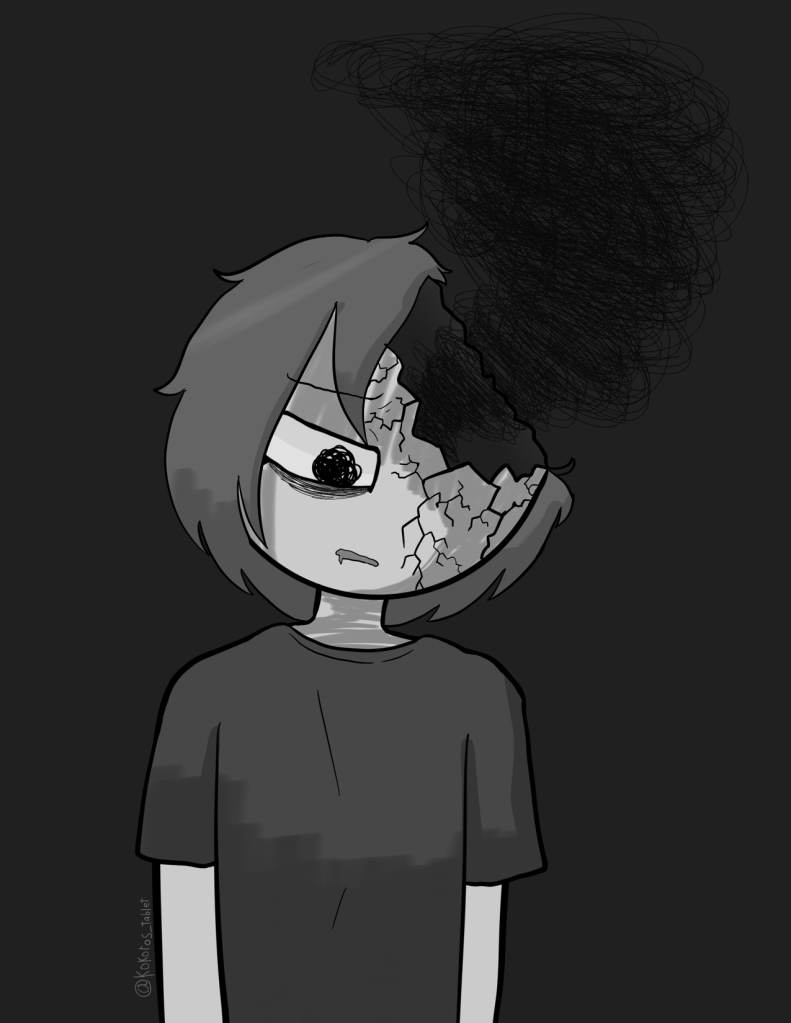
“Burnout” by Sienna Mendez. Find more of her artwork here. Copyright Sienna Mendez
Often when kids withdraw from school, they go through a decompression period that looks like staying home and refusing to go out, or even staying in their rooms.
This is common. Hundreds of families have shared their stories of withdrawal, or cocooning, or autistic burnout.
Sometimes, it’s a sign of depression. Please screen your child for depression and seek professional help if you are concerned.
Often, this is a part of the process of healing from school trauma, self-exploration, or recovering from burnout. When kids are accustomed to adults telling them what to do with their time, it’s an adjustment to be self-directed.
Distinguishing between cocooning, burnout, and depression is tricky. Insight from lived experience is essential! Look for writing, podcasts, and social media from adults who share your child’s diagnoses, life experiences, strengths, and challenges. See what resonates in order to calm your fears or validate your concerns, and figure out next steps.
Good professional help can be hard to find. Most professionals have not deschooled, and may not understand homeschooling let alone unschooling. Many have never addressed ableism in their assumptions and their practice. The list of questions below should help you screen professional mental health, speech, or occupational therapists for consent-based, neurodiversity-affirmative, and anti-ableism practices.
Cocooning can be especially intense for PDA (Pathological Demand Avoidance is the diagnosis, renamed Persistant Drive for Autonomy by many PDA’ers).
Cocooning as part of deschooling
The Exploring Unschooling podcast has an episode specifically addressing cocooning, which is common among kids who recently withdrew from school as well as part of the rhythm for many unschoolers, especially in the teen years.
https://livingjoyfully.ca/blog/2021/08/eu292-embracing-cocoons-and-bubbles-with-anna-brown/
Autistic Burnout
Many actually autistic folks share how common it is to experience autistic burnout, especially when the environment has not be accommodating or neurodiversity affirmative. If your child is autistic, especially if they successfully mask or are under pressure and stress, stories from other autistic folks might help you know what to do to help. Other neurodivergent folks who may not be autistic can experience forms of burnout.
Reflective parenting through burnout, meltdown, or aggression
Professional Help
Finding consent-based, disability-informed therapy
 Unschooling Every Family
1 Comment